
From Karlsruhe to Nairobi: When Contacts Turn into Genuine Encounters
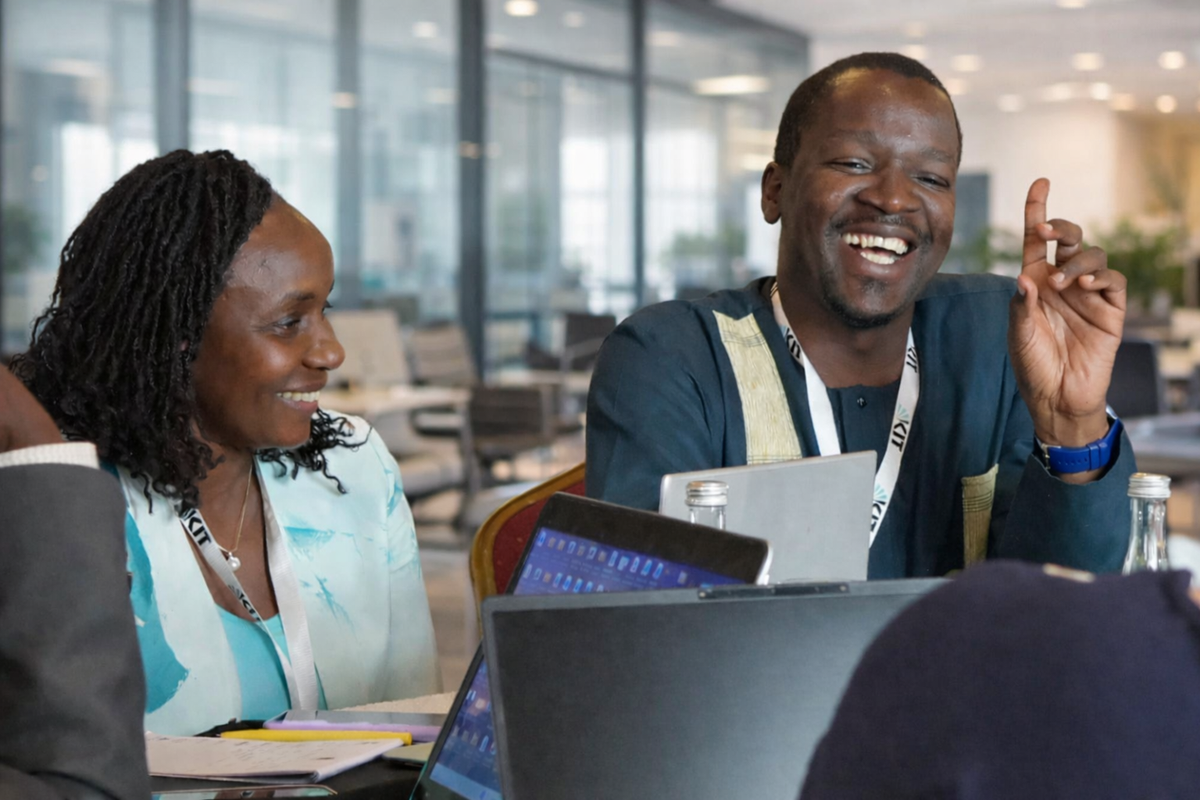
Climate, water, and energy are everyday concerns in East Africa. How can KIT contribute? One way is by creating a platform for personal exchange: In Kenya, KIT brought together people from research, innovation, and organizations that enable collaboration across the region. Tu-Mai Pham-Huu from International Communications shares her impressions.
Read more
Sometimes you only realize why international cooperation is more than just a bullet point in a strategy when you are present. For me, Nairobi was just such a moment.
For three days, we met with partners from East Africa - scientists, university representatives, innovation leaders, and funding organizations. Officially, the event was called the FA(ST)²Africa Networking Meetings. Unofficially, it was above all a deep and lively exchange about how to tackle global challenges together - and why now is the exact right moment to do so.
It quickly became clear: Africa is not a “topic.” Africa means people, institutions, and vast scientific expertise across a wide range of disciplines. This interdisciplinarity - spanning climate science, energy research, and information science - made the meeting intriguingly open to fresh ideas.
Big issues, up close and personal
Words like climate change, water, and energy are not abstract here. When someone talks about rain, they don’t mean statistics but last season’s reality—fields left parched because the expected rain never came or areas suddenly flooded from too much water at once. Some examples even came from Germany, where recent floods have posed challenges.
This closeness shaped the conversations. They focused on very specific questions:
How early can extreme weather events be detected? What happens when data is missing? Which solutions work in the real world and which only look good on paper?
What was most impressive for me: neither KIT nor the African partners came with ready-made answers. Instead, everyone brought their own ideas, priorities, and a genuine eagerness to think things through together.
Early warning systems, new AI approaches, land use, water management—all these topics came up repeatedly. But the discussion didn’t stop at buzzwords. Over the first cappuccino at breakfast, people were already debating who might partner with whom to get projects moving. New table companions at lunch and dinner often chatted about funding opportunities for joint projects.
Project partners and potential funders at one table
The mix of representatives from organizations like DAAD, GIZ, and the German Embassy was especially successful. These were people on the ground familiar with funding programs, frameworks, and international contexts—and approachable even during informal coffee breaks.
The meeting was deliberately designed as a platform to get to know each other and find matches. Researchers, institutions, and funding bodies came together, explored synergies, connected, and brainstormed new ideas.
Why KIT fits in so well
So, what does KIT bring to the table? Mainly, a capacity not to offer one fixed solution but to see connections and build bridges.
Climate, water, and energy can’t be looked at in isolation. This is exactly where KIT’s interdisciplinary perspective - from climate research and hydrology to energy technology and data science - becomes invaluable.
Equally important: we listened. We didn’t just present and explain. Uganda is not Ethiopia, and neither is Kenya. That might sound obvious, but it’s vital to recognize. Local contexts, regional expertise, and very different research realities emerged in the discussions. And from there joint thinking beyond standard solutions took shape.
The venue – a green oasis away from the urban hustle
The setting was at least as important as the content: The conference hotel was deliberately located away from the hectic city center in a quieter, greener spot with a relaxed atmosphere and plenty of space to breathe. It felt almost like a retreat - and that made a big difference.
Discussions didn’t end with the last scheduled session; sometimes, they really began over coffee breaks, between sessions, or during walks across the park-like grounds with impressive native trees and plants. The more informal the encounters became, the more open and insightful the conversations were.
By day three, the participants - senior researchers with extensive international experience -were noticeably more open with each other than on day one. Trust doesn’t develop in plenary sessions, but in between. And this trust, along with personal encounters, lays the foundation for more effective collaboration down the road. Everyone agreed: Putting a face to a name makes it that much easier when you receive an email in the future.
What’s Next?
Of course, Nairobi is not the end point nor was the workshop an end in itself. This was the second meeting of its kind; the first took place in Stellenbosch, South Africa, in October 2025. Another gathering in a different part of Africa is planned for 2026.
The conversations, ideas, and contacts will now be evaluated, developed further, and -hopefully - translated into next steps.
What I’ll take away most strongly is this: International cooperation works and holds real promise when people come together on the ground, share common challenges, and approach them with curiosity, openness, and genuine determination.
Karlsruhe, January 2026
Author: Tu-Mai Pham-Huu
Background
The FA(ST)²Africa Networking Meetings in Nairobi brought together representatives from numerous universities and institutions across East Africa—including the University of Nairobi, Kenyatta University, Technical University of Kenya, Makerere University (Uganda), Arba Minch University (Ethiopia), and the University of Dar es Salaam (Tanzania). The university network was complemented by actors from higher education policy, innovation promotion, and international cooperation, including the Commission for University Education (Kenya), the Kenya National Innovation Agency, the Inter-University Council for East Africa, DAAD, GIZ, and the German Embassy in Nairobi.
Cycling Adventure - Studying Abroad on Two Wheels
More than 1,800 kilometers by bicycle to a semester abroad: Two KIT master’s students deliberately chose a sustainable alternative to flying and cycled across Europe to their host universities in Iceland and Sweden. Their journeys combine mobility, adventure, and sustainability—and offer new perspectives on travel and personal growth. Maylin Özbilgic spoke with them.
🌍 Read more
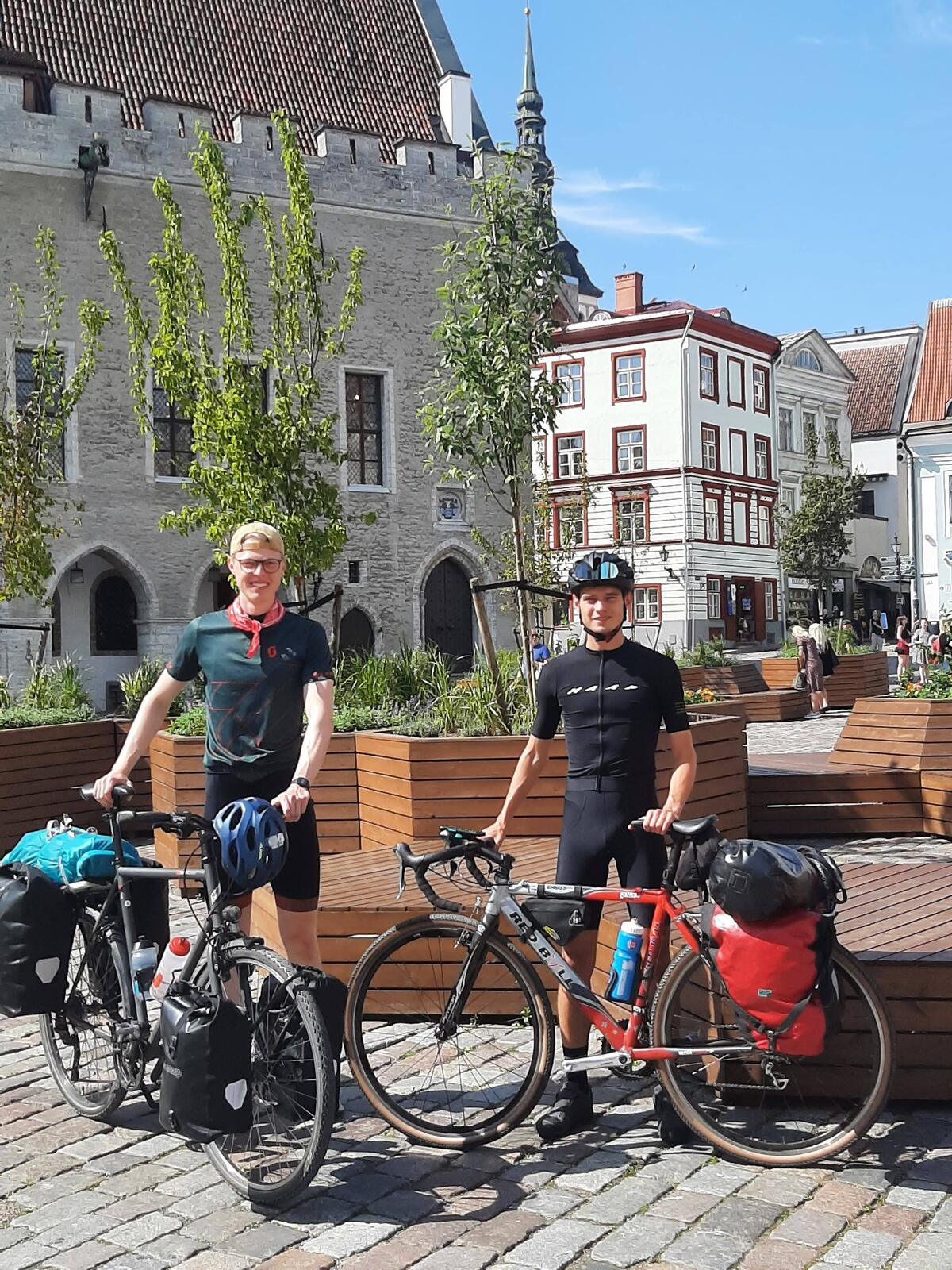
When people think of a semester abroad, they often imagine booking flights, struggling with luggage, and dealing with airport security. Not so for Julian and Arnd. The two master’s students from the Karlsruhe Institute of Technology (KIT) independently chose an unusual yet sustainable way to travel: cycling more than 1,800 kilometers across Europe.
The International Students Office at KIT launched the “Green Challenge” for students who wish to travel by bicycle. What began for both as a personal challenge also became, almost incidentally, a contribution to this initiative.
“I Just Set Off” - Julian’s Journey to Iceland
Julian, who studies Electrical and Information Engineering, did not even know about the Green Challenge when he set out for Iceland. “I had already done several cycling trips before,” he says. Right after his exams, the 24-year-old took the train to Hamburg, continued by bike through Denmark to the ferry to Iceland, and finally crossed the Icelandic highlands. In total, he was on the road for 17 days: 12 days cycling, 2 days on the ferry, and 3 rest days.
The official feedback regarding the Green Challenge came later by email, simply stating: “Nice that you participated.”
“It Was a Rational Decision” - Arnd Cycles to Sweden and Back
The destination for 24-year-old Arnd was KTH in Stockholm, where he planned to study “Functional and Structural Engineering.” “I’m very open to other cultures, and since I had never been to Denmark or Sweden, it was a great opportunity,” he explains. A look at Google Maps, the ferry connections, and his sense of adventure sealed the deal for the eleven-day, 1,800-kilometer journey from KIT to Sweden.
After completing his year abroad, Arnd undertook the 2,450-kilometer return trip through the Baltic states, Poland, and the Czech Republic back to Karlsruhe together with a friend. It was a contrast to the solo outbound journey and a true friendship project: “We mastered challenges together and kept our spirits up even with little comfort. You really get to know each other in a completely different way.”
Inspiration from Home and the Challenges of the Journey
Although both are master’s students, Arnd and Julian were driven by different motivations. Julian consciously wanted to avoid flying - his last flight was in 2018. Arnd, on the other hand, was influenced by his family: “My parents used to go on cycling holidays and raved about them.” His first solo tour took him on a rickety old bike from a train station to visit his grandmother in Saarland - without GPS, just a piece of paper listing the towns along the way. Looking back, he says: “Especially at the beginning, it’s good when not everything runs perfectly.”
Despite their experience, the journey was no walk in the park for either of them. Julian vividly remembers arriving in Iceland during “the worst weather of the summer”: rain, fog, and low-hanging clouds. “I came from sunny Denmark, and suddenly everything was gray.” The bad weather lasted a week. Even a painful ankle did not stop him: “You just have to find a solution. Giving up is not an option.”
Arnd struggled with long stages: “The last three days with 200 kilometers each took a lot of strength. I lost six kilos on the way there.” The three-week return journey was also physically demanding due to rain and headwinds. What helped? “Not overthinking it - just keep going and look forward to dinner.”
Encounters Along the Way - Brief but Memorable
Among all the experiences, a few highlights stood out. For Julian, it was a chance meeting with a French cyclist: “We spent a fun day together at a campsite because the weather was too bad to continue. We exchanged a lot about our travels and experiences.”
Arnd recalls several memorable moments as well. In Lübeck, he chatted with an elderly man at a fried fish stand about his eventful life. On the return journey, a stray dog followed him for kilometers before they parted ways after sharing some food.
Breakdowns, Challenges, and Lessons Learned
Julian was lucky - no breakdowns, no major issues. Arnd’s journey was different: a creaking bottom bracket accompanied him for many days. Although the replacement part arrived at a parcel station near the German-Danish border, it was too late. “After waiting two days, I just kept riding with the creaking.” On the return trip, water damage rendered his phone unusable - three weeks of digital detox, which “actually did the trip good in hindsight.”
Both agree that the biggest challenge was not physical strain but mental endurance: packing up the tent in the rain, cycling on despite frustration, being alone. Music, conversations with others, and small routines helped.
What Julian had learned on previous trips - solving problems pragmatically - proved invaluable. Arnd agrees: “You learn that somehow everything works out - just rarely as planned.” He adds: “The less you have, the easier it is to move forward - a metaphor for life.”
New Perspectives on Mobility and Consumption
Both draw similar conclusions: sustainable travel is possible, but demanding. “I didn’t meet anyone who traveled to Iceland without flying,” Julian says. Arnd, an avid cyclist himself, gained a new perspective: “How little you really need and how much everyday luxury you often stop noticing.” Julian reflects: “If the effort were lower, many more people would probably do it.” For future trips, he and his girlfriend are already planning a combination of train and bike - a compromise, but a conscious one.
Looking back, Arnd says: “With every day, you move forward. And every day is an opportunity to learn something new about yourself, other people, and life on the road.”
Both demonstrate that you don’t have to be an activist to act sustainably. Sometimes, all it takes is a brave decision or simply the desire for an adventure that changes more than you initially expect.
🎥 Julian’s journey can be followed on his YouTube channel under the title A Tour of Ice and Fire.
📸 Short videos of Arnd’s trips can be found on his Instagram channel (@arnd.hanisch).
🔊 The International Students Office’s “Green Challenge” also applies to Erasmus stays in the 2025/26 academic year. If you travel by bicycle - whether from abroad to KIT or from KIT to your Erasmus semester - contact erasmus-out ∂does-not-exist.intl kit edu. Document your journey and win great prizes!

