
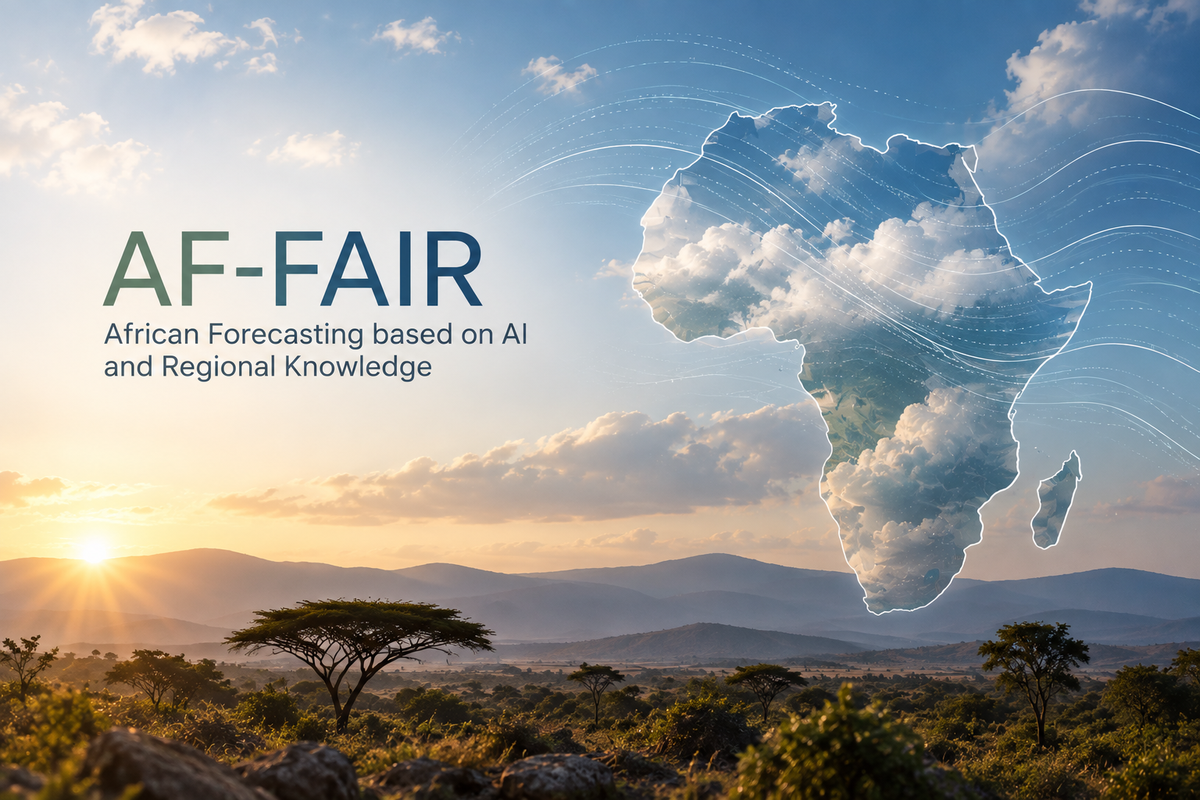
The KIT-coordinated project AF-FAIR (AFrican Forecasting based on AI and Regional Knowledge) has been selected as one of three projects under the Horizon Europe call “Improving Weather and Climate Models for Africa”.
AF-FAIR brings together ten African and eleven European research institutions as well as operational weather and climate centres. The project aims to advance AI-based weather prediction and climate projection for Africa, with African institutions playing a key role in the development, application and long-term implementation of the approaches. Particular emphasis will be placed on operational use, capacity building and long-term sustainability.
The consortium is currently working with the European Commission towards finalising the Grant Agreement. The project is expected to start in spring 2027.
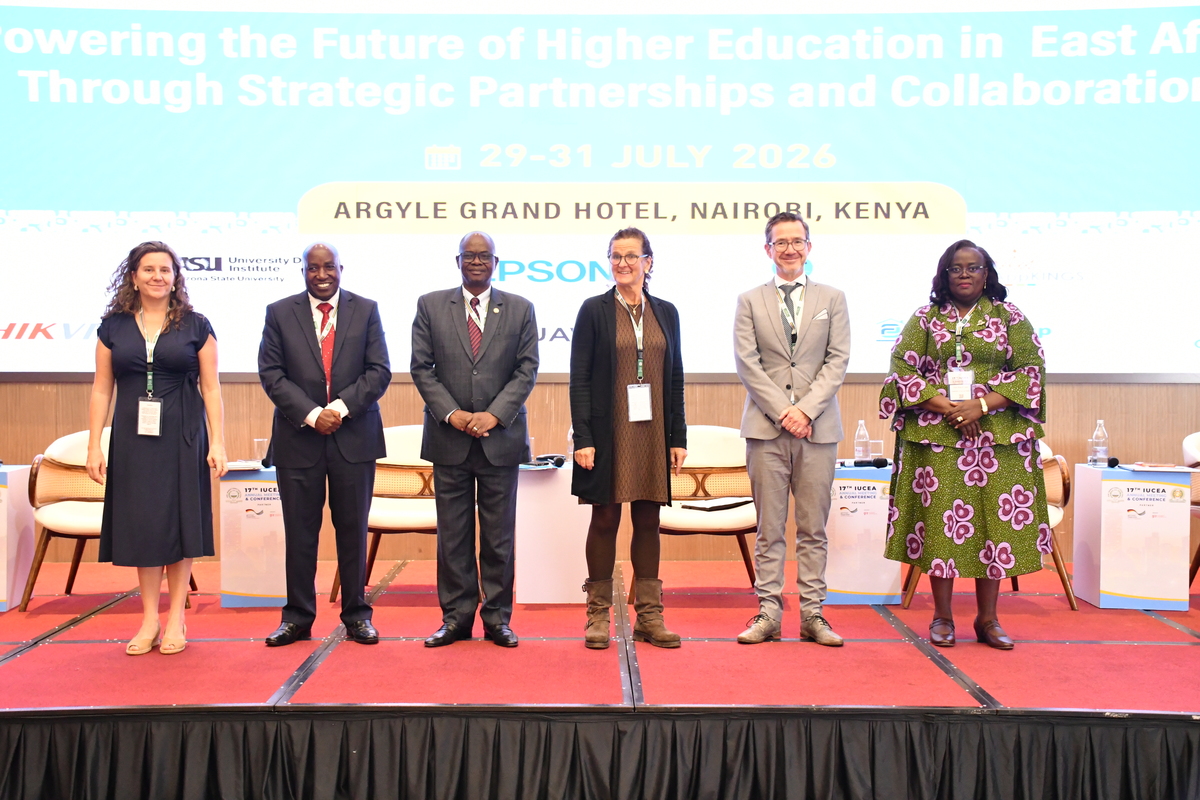
A connection established through FA(ST)²Africa has led to further opportunities for exchange and collaboration in East Africa: Following the FA(ST)²Africa Networking Meeting in Nairobi in December 2025, the Inter-University Council for East Africa (IUCEA) invited Karlsruhe Institute of Technology (KIT) to participate in its 17th Annual Meeting and Conference in Nairobi, Kenya.
Held from July 29 to 31, 2026, the conference focused on the theme “Powering the Future of Higher Education in East Africa through Strategic Partnerships and Collaborations.” More than 400 participants attended, including policymakers, university leaders, higher education regulators, researchers, students, industry representatives, and development partners from East Africa and beyond.
IUCEA is an institution of the East African Community (EAC) that coordinates cooperation in higher education and university research across the region. Among other activities, it promotes quality assurance, academic mobility, research and innovation, and cooperation between higher education institutions.
The conference also marked the launch of the IUCEA Strategic Plan 2026–2031 and the Regional AI Network of Universities. The new network aims to connect universities working in AI education, research, and innovation, pool expertise and infrastructure, and strengthen institutional capacities for the responsible use of artificial intelligence.
Strategic partnerships with Africa
Representing FA(ST)²Africa, Dr. Jörg Helmschrot delivered a keynote entitled “Collaboration with Africa: Potential, Limitations and Risks.” He also participated in a panel discussion with representatives of African universities and research institutions, the Kenyan government, and the German Academic Exchange Service (DAAD).
In his contribution, Helmschrot presented existing and emerging collaborations between KIT and key partner institutions in East Africa. He highlighted the potential for strategic partnerships in the fields of climate, water, energy, as well as applied and responsible artificial intelligence.
The discussions in Nairobi also opened up perspectives for further cooperation. Following his keynote, Helmschrot exchanged ideas with representatives from Kenyan and other East African universities on possible future joint activities in these fields.
During the conference, he also met Dr. Joseph Orero and Dr. Esther Gathenya Khakata from Strathmore University to further explore collaboration in the field of applied and responsible AI in education and research.
KIT’s participation in the IUCEA Annual Meeting thus builds directly on the networks established through FA(ST)²Africa and contributes to the initiative’s goal of strengthening long-term, mutually beneficial partnerships between KIT and African higher education and research institutions.


There are still places available for the FA(ST)²Africa Intercultural Training with a focus on East Africa on 8 October 2026. The full-day training is aimed at KIT members who are already collaborating with partners in East Africa or are planning to establish cooperation in the region.
The workshop will focus on cultural contexts, communication styles, expectations, and approaches to collaboration in East Africa. Through practical insights, participants will strengthen their intercultural skills and learn how to build trust, foster successful international partnerships, and navigate intercultural interactions with greater confidence.
The workshop will be conducted by Zena-Gabrielle Hailu, an experienced intercultural trainer, facilitator, coach, and consultant. With more than 25 years of experience in international and intercultural contexts across Africa, Europe, and North America, she specializes in international collaboration, intercultural communication, diversity and inclusion, leadership communication, and capacity building.
The training will take place on 8 October 2026, from 9:00 to 17:30, at the KIT Library, Vortragssaal (3rd floor, Neubau) and is organized as part of the FA(ST)²Africa Strategy Fund project.
Places are still available. As participation is limited to 20 people, remaining places will be allocated on a first-come, first-served basis.
To register, please send your full name, position, KIT institute, and a brief statement about your motivation to:
Mary Shopitan
mary.shopitan9∂kit.edu
Some scientific collaborations begin with a joint research project – others with a research stay abroad. In the case of the Karlsruhe Institute of Technology (KIT) and the University of Cape Town (UCT), the spark was ignited in 1990 when Prof. Cyril O'Connor spent a research stay at KIT's Engler-Bunte Institute. What began as an academic visit laid the foundation for a partnership that has grown continuously for more than three decades. Today, the two universities maintain close cooperation in research, education, and scientific exchange.
Prof. Hans Schulz, then a faculty member in the Department of Chemical Engineering at KIT, hosted Prof. O'Connor's research stay. Over the following years, he steadily expanded the collaboration through student exchanges, joint research projects, and regular reciprocal visits. Numerous early-career researchers from KIT completed research stays in Cape Town, while several KIT graduates joined UCT and went on to build distinguished international academic careers there and at other institutions.
Today, the partnership is carried forward by a new generation of researchers whose academic careers are closely linked to both institutions. Prof. Eric van Steen and Prof. Michael Claeys, who both earned their doctorates under the supervision of Prof. Hans Schulz at the Engler-Bunte Institute, are now among the leading figures at UCT's Catalysis Institute. Since 2022, Prof. Moritz Wolf has held the tenure-track professorship Catalyst Materials for the Energy Transition at KIT, while Prof. Nico Fischer holds the NRF-DSI SARChI Chair in Sustainable Catalysis at UCT. Both studied at KIT before completing their PhDs at UCT under the supervision of Prof. Michael Claeys. Together, they continue and further strengthen this long-standing collaboration.
The institutional partnership has also deepened over time. Since 2017, KIT and UCT have been connected through a Memorandum of Understanding (MoU), providing a formal framework for their long-standing cooperation. Since 2022, researchers from both universities have also been working together in the international research project CARE-O-SENE, developing new catalysts for sustainable aviation fuels and green kerosene.
Beyond joint research projects, the partnership is shaped by workshops, guest lectures, and a wide range of academic exchange activities. These initiatives create opportunities for new ideas, strengthen international research networks, and support the development of early-career researchers at both institutions.
For the FA(ST)2Africa project, this partnership—built and nurtured over decades—provides a valuable foundation. It demonstrates how sustainable international collaborations emerge: through scientific excellence, the continuous exchange of knowledge, the development of mutual trust, and personal relationships that endure far beyond individual projects. At the same time, the collaboration between KIT and UCT illustrates how long-term scientific partnerships can pave the way for new joint initiatives.
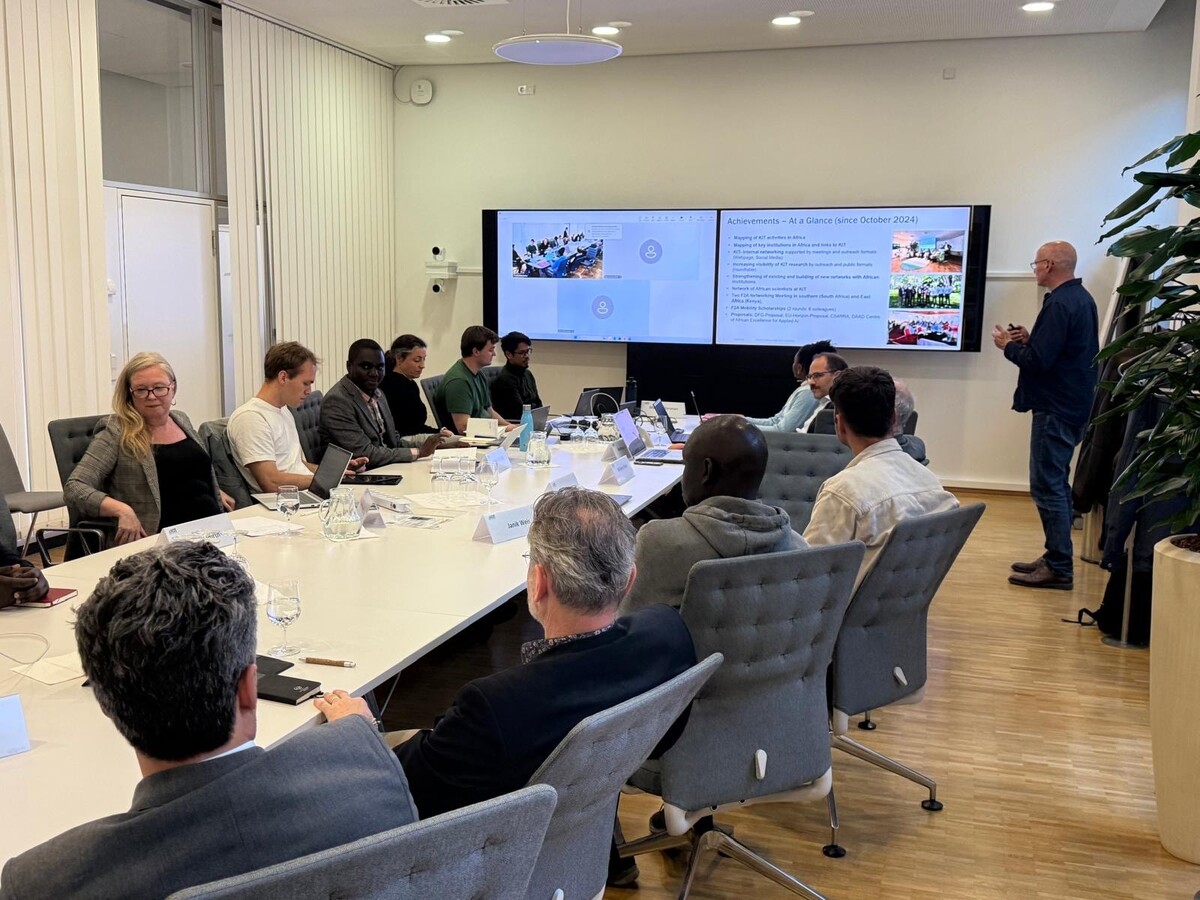
FA(ST)²Africa Mid-Term Meeting: New Partnerships and First Scholarship Fellows Arrive at KIT
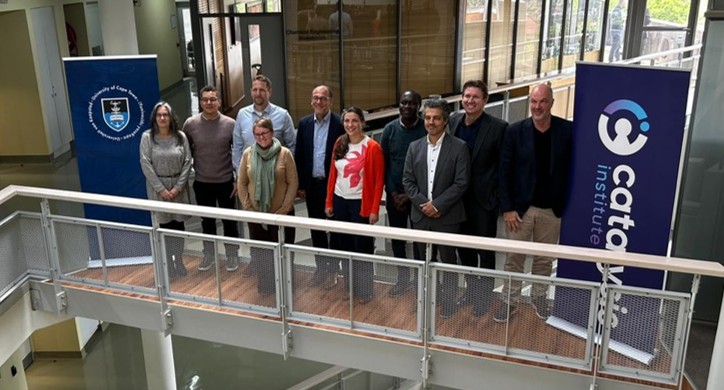
On 28 April, the FA(ST)²Africa project held its Mid-Term Meeting at KIT. Project team members, KIT Vice President Prof. Thomas Hirth, and participating researchers came together to review the initiative’s progress and achievements to date. The meeting highlighted how the network has continued to grow over the past months through new partnerships, expanding research collaborations, and the launch of mobility activities. Particularly encouraging was the fact that the first scholarship fellows from African partner institutions are now preparing for or already undertaking research stays at KIT.
Strengthening Strategic Partnerships Across Africa
Since October 2024, FA(ST)²Africa has successfully implemented a wide range of activities. Key priorities have included mapping Africa-related activities across KIT, establishing new partnerships, and strengthening connections between researchers and institutions in Germany and across the African continent.
Project leader Prof. Andreas Fink from the Institute of Meteorology and Climate Research – Troposphere Research (IMK-TRO) presented an overview of the project’s achievements and milestones. He highlighted the establishment of new exchange and networking formats with African partner institutions and emphasized the growing visibility of Africa-related activities at KIT.
Project coordinator Dr. Marlon Maranan presented the project’s strategic roadmap, which is built around three key pillars:
- Identification – making existing activities and expertise visible
- Connection – linking researchers and institutions
- Institutionalization – establishing long-term strategic partnerships
The overarching goal of FA(ST)²Africa is to bring together KIT’s diverse Africa-related activities and transform them into sustainable structures for collaboration.
Successful Networking Events in Africa
A major focus of the meeting was the review of two successful networking events held in Stellenbosch, South Africa, and Nairobi, Kenya.
Dr. Davide Vanzo from the Institute for Water and Environment (IWU) and Dr. Justine Nyarige from the International Scholars & Welcome Office reported on the networking event in Stellenbosch. The event aimed to introduce KIT as a research partner and facilitate new collaborations through targeted matchmaking activities. Participants highlighted the strong interest among African institutions in scientific exchange, joint research projects, and mobility programmes. The event provided valuable opportunities to deepen existing contacts and establish new partnerships.
The networking event in Nairobi likewise demonstrated significant potential for future cooperation. Dr. Justine Nyarige reported on ongoing discussions surrounding a planned proposal for an “Africa Centre of Excellence,” which is scheduled for submission at the end of June 2026.
The presentations also illustrated the thematic strengths of current collaborations. Water, energy, climate, raw materials, and sustainable development emerged as key areas of cooperation. At the same time, FA(ST)²Africa increasingly serves as a platform that strategically connects activities that were previously operating independently of one another.
Mobility Scholarships Foster Scientific Exchange
Pascale Köhler from the International Scholars & Welcome Office presented the progress of the FA(ST)²Africa Short-Term Mobility Scholarship Programme. Several researchers from African partner institutions have already completed research stays at KIT or are currently preparing for their visits. The scholarship holders come from partner institutions in Ghana, Uganda, Kenya, Ethiopia, and South Africa.
The programme not only promotes scientific exchange but also contributes to building long-term institutional partnerships between KIT and African universities.
New Focus Areas and Strategic Perspectives
A key objective of the Mid-Term Meeting was to discuss current and emerging thematic priorities and their relevance for the development of strategic partnerships within FA(ST)²Africa. Representatives from the KIT Executive Board and participating institutes contributed to these discussions.
Prof. Ina Schaefer from the Institute of Information Security and Dependability (KASTEL) proposed establishing digitalization and data science as a new focus area within the network. Future activities could also include stronger collaboration with African start-ups. The aim is to jointly advance digital innovation, knowledge transfer, and application-oriented research.
Prof. Thomas Hirth emphasized the strategic importance of solar energy for KIT, particularly in the context of decarbonization and sustainable energy supply. He also highlighted the close links between energy and raw material issues, including opportunities arising from the use of carbon-based waste streams.
The meeting further addressed measures to support early-career researchers. Planned activities include attracting additional doctoral candidates and organizing regular seminars. Participants also discussed potential collaborations with development and funding organizations that are currently seeking strong Africa-focused initiatives.
During the discussion session, participants once again emphasized the importance of scientific mobility. Students and researchers should be given opportunities to build expertise at KIT and subsequently transfer this knowledge to their home institutions and countries. Nigeria was cited as an example where students are being supported in gaining experience in areas such as digital education and start-up development. At the same time, participants discussed the benefits that such collaborations can generate for Germany, particularly in addressing shortages of skilled professionals in technical fields.
Dario Mager from the Institute for Micro Process Engineering (IMVT) addressed challenges related to international exchange programmes, particularly visa procedures and pre-financing requirements for international students. He also announced a summer school to be held at KIT.
Finally, Prof. Moritz Wolf from the Institute for Catalysis Research and Technology (IKFT) presented a Helmholtz-funded research project on sustainable aviation fuels that has been extended until the end of 2026. The project includes intensive collaboration with African universities, including the University of Cape Town in South Africa.
Looking Ahead
A wide range of activities are planned for the remainder of 2026. These include:
- an intercultural training programme focusing on cooperation with East Africa,
- a Donor Engagement Conference at KIT on 29 September 2026,
- the further development of KIT’s Africa Strategy,
- new DAAD and EU funding proposals,
- and the continued expansion of scientific networks and partnerships.

Apply Now: German-African Innovation Incentive Award 2026 Strengthens Research and Innovation
International research thrives on bold ideas, partnerships, and the shared ambition to address global challenges. With the newly announced German-African Innovation Incentive Award 2026, the Federal Ministry of Research, Technology and Space (BMFTR) is sending a strong signal in support of this collaboration and opening up new opportunities for researchers in Germany and Africa to jointly develop innovations with societal impact.
The call is looking for German-African research projects with high application potential – research that creates concrete solutions for challenges in health, climate, mobility, sustainability, and technological development. The funding program is aimed at African researchers working together with German partner institutions to further develop innovative research results and transfer them into practice.
The call offers significant potential for existing collaborations at KIT, while new partnerships are also explicitly encouraged. Joint projects can be funded in areas including:
- Artificial Intelligence
- Health Research
- Biotechnology
- Climate-neutral Energy and Mobility
- Climate and Sustainability Research
- Aerospace
- Quantum Technologies
In addition to funding of up to €150,000 for a maximum duration of 24 months, the program provides researchers with transfer and qualification opportunities, networking activities, and support in innovation development and commercialization. The overall goal is to establish long-term innovation structures and sustainable scientific networks between Germany and African countries.
FA(ST)²Africa encourages researchers at KIT to connect with African partners, strengthen existing collaborations, or develop new project ideas. The deadline for submitting project outlines is June 30, 2026.
Further Information
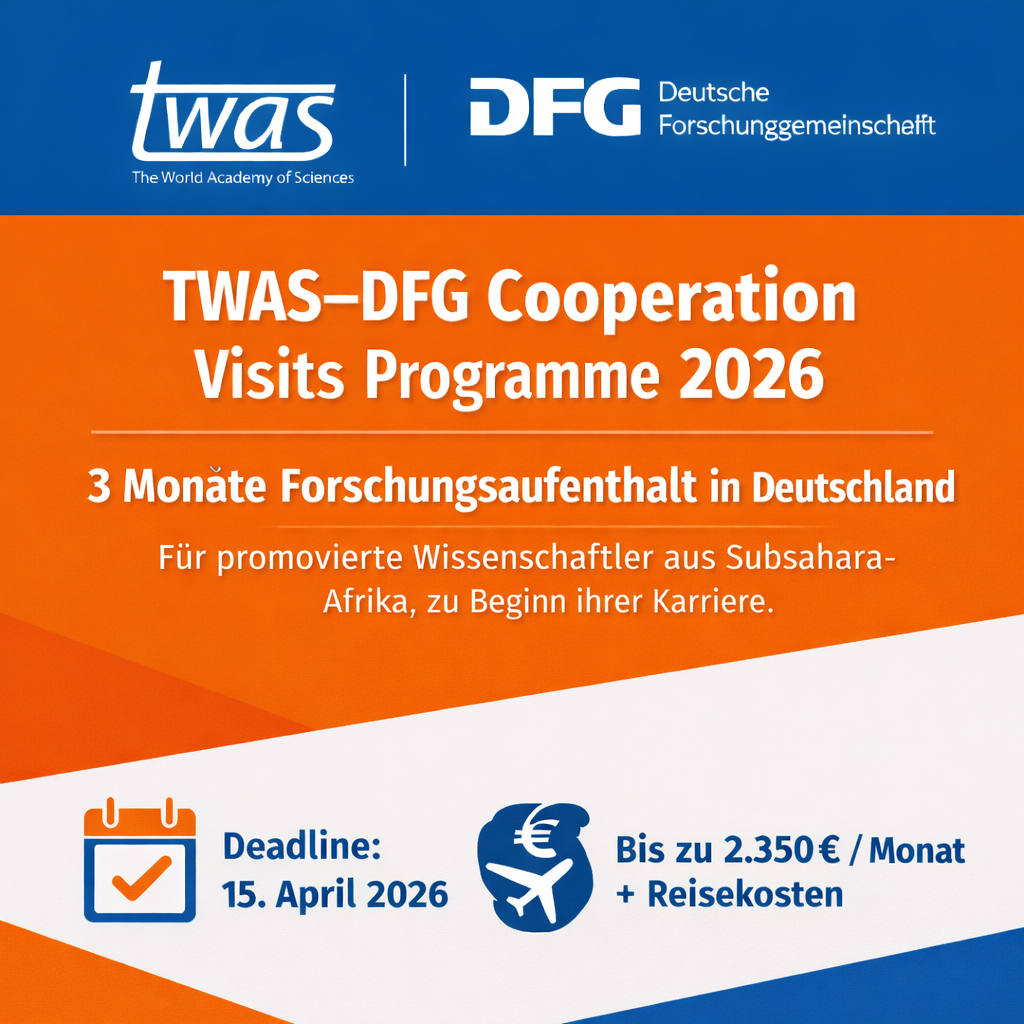
The German Research Foundation (DFG), in cooperation with The World Academy of Sciences (TWAS), announces the TWAS–DFG Cooperation Visits Programme.
The programme enables postdoctoral researchers in the early stages of their careers from countries in Sub-Saharan Africa to undertake a three-month research and cooperation visit at a scientific institution in Germany.
The aim is to strengthen scientific cooperation, generate new research impulses, and establish long-term partnerships between German and African research institutions.
💰 Funding Scope
The DFG provides the following funding:
- Up to €2,350 per month for living expenses (paid to the host institution)
- Travel reimbursement of up to €1,350 (airfare, train, visa fees)
- Up to €700 per month for project-specific material costs (e.g. materials or laboratory expenses)
✅ Eligibility Requirements
Guest researchers must:
- Hold a research position at an institution in a Sub-Saharan African country (excluding Egypt, Algeria, Libya, Morocco, and Tunisia),
- Demonstrate at least five years of scientific activity in Sub-Saharan Africa or in defined countries of the Middle East and North Africa,
- Have completed their doctorate no earlier than 2021 (family-related exceptions apply for female researchers),
- Not currently be working in Germany and not maintain an ongoing research collaboration with the host institution.
Application deadline: 15 April 2026
Further information is available here: TWAS-DFG Cooperation Visits Programme | DFG
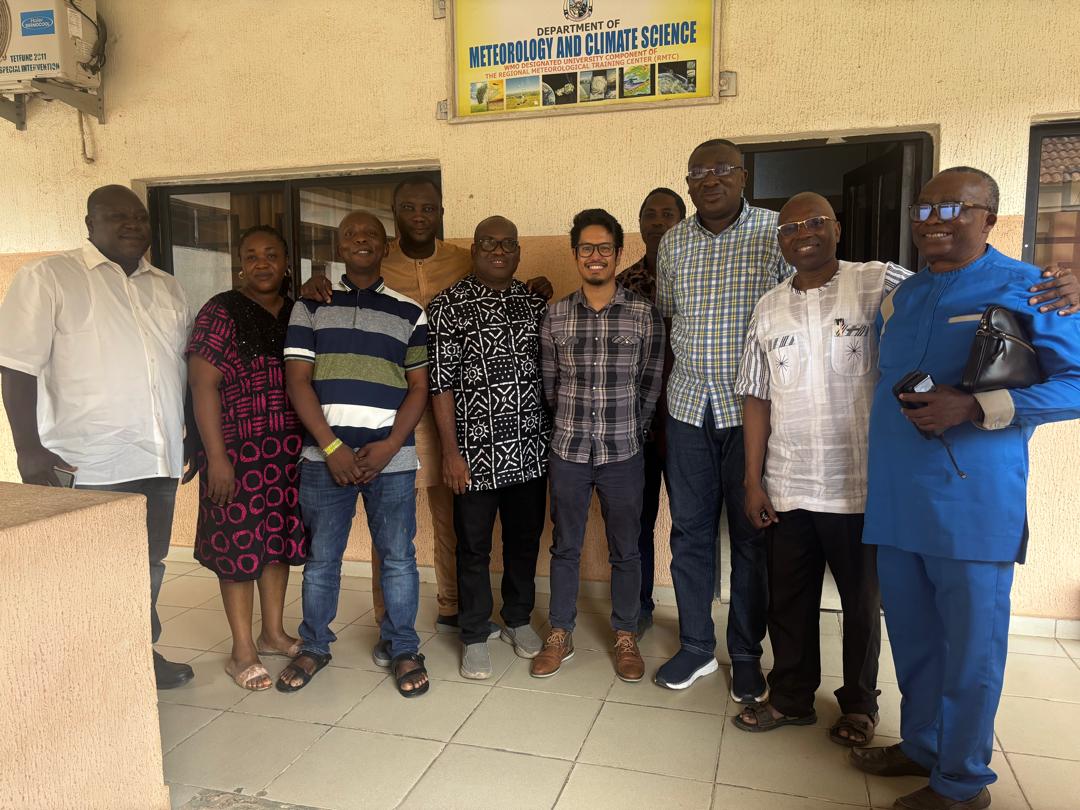
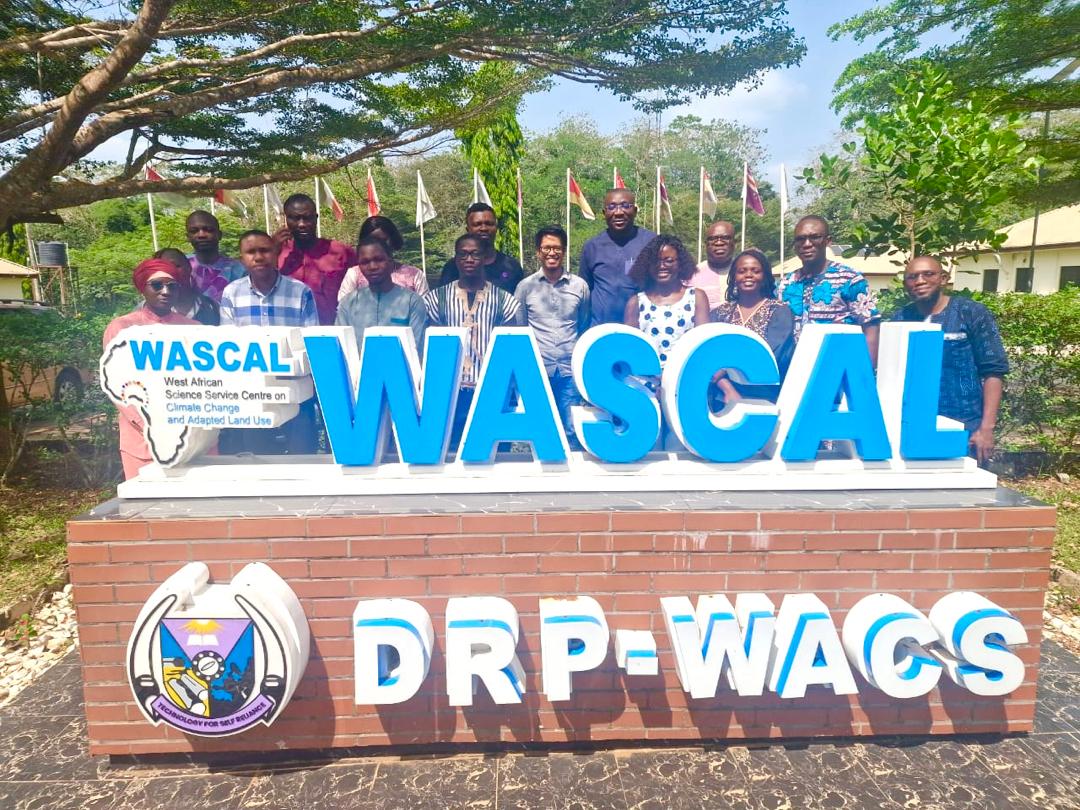
FA(ST)2Africa on site: Climate research, education, and partnerships in West Africa
Parched soils, shifting rainfall patterns, and an increasing frequency of extreme weather events shape everyday life in many parts of West Africa. What is modeled, simulated, and analyzed in climate models has long since become reality on the ground—directly affecting agriculture, water availability, and societal stability.
Against this backdrop, Dr. Marlon Maranan, project coordinator of FA(ST)2Africa, traveled to West Africa in December 2025. As part of the NetCDA project (German Network for Academic Training on Climate Change Adaptation in Africa), funded by the Federal Ministry of Research, Technology and Space, he visited partner institutions in Akure and participated in a NetCDA strategic workshop in Lomé. The aim of the trip was to further develop academic training formats, deepen scientific cooperation, and strengthen joint strategies for long-term capacity building in the field of climate adaptation. Direct exchanges with highly motivated and excellently trained early-career researchers on site left Dr. Maranan both reflective and optimistic. “Traveling to West Africa often means confronting the impacts of climate change directly. However, interacting with motivated young scientists and doctoral researchers repeatedly gives me the sense that they are ready for the major challenges and transformations ahead,” explained Dr. Maranan, a meteorologist at the Institute of Meteorology and Climate Research at the Karlsruhe Institute of Technology.
Nominations for FA(ST)2Africa Mobility Scholarships are Now Open!

With the FA(ST)2Africa short-term fellowships for international researchers as well as administrative staff from universities or other relevant institutions, KIT sends a strong signal in support of expanding its strategic partnerships with the African continent. The fellowship program enables KIT members to invite excellent researchers or administrative personnel from Sub-Saharan Africa to Karlsruhe for stays of one to three months.
The program supports research stays that help initiate or deepen joint projects in research and teaching. For example through pilot studies, proposal drafts, or the joint publication of key research results. In addition, administrative staff may be invited if they are interested in contributing to KIT’s efforts to expand strategic partnerships with institutions in Africa.
Eligible for nomination are PhD-holding researchers with an outstanding academic profile and proven experience in international collaboration. For administrative staff, their current position and their local networks are of particular interest. Candidates must have lived in a Sub-Saharan African country for at least five years and must not hold a permanent employment contract in Germany at the time of selection.
Only KIT staff members who are actively involved in the FA(ST)2Africa project are entitled to submit nominations. Direct applications from individuals in Africa are not possible.
Selection is carried out by an interdisciplinary committee based on scientific excellence, innovation potential, and prospects for sustainable cooperation. Up to eight fellowships are available, each with a duration of one to three months or, in the case of administrative staff, one to two weeks.
Next Deadline: December 15, 2025
Contact and Submission: fast2africa∂intl kit edu
Ten years after the Paris Climate Agreement, international climate policy faces a new test. At the UN Climate Conference COP30 in Belém, Brazil, researchers from the Karlsruhe Institute of Technology (KIT) are contributing their expertise, among them Prof. Harald Kunstmann, Head of the Regional Climate Systems Department at the KIT Campus Alpin in Garmisch-Partenkirchen. Since 2015, he has been actively involved in the annual climate conferences.
Together with partner institutions, Kunstmann is organizing the side event "Early Warning, Anticipatory Action and Risk Insurance for Proactive Disaster Management" on 12 November 2025. The event aims to highlight current advancements and opportunities in forecasting hydrometeorological extremes such as droughts, heatwaves, and floods, with a particular focus on the African continent. The session was developed in the now well-established “co-design” approach across continents. “We are experts in scientific method development, but of course our African colleagues are the experts on the ground. Together we form highly complementary teams when it comes to implementing early warning systems,” Kunstmann explains.
The event will spotlight progress in seasonal climate prediction. In his presentation "Early Warning for Droughts with Subseasonal to Seasonal Predictions: Current Achievements and Regional Co-design in Africa," Kunstmann will showcase recent research demonstrating how improved forecasting models can help identify droughts early on. “We are increasingly able to predict anomalies in temperature or precipitation up to seven months in advance; not to the exact day, but we can indicate whether a month is likely to be warmer, cooler, wetter, or drier overall,” he says. “Especially in tropical regions, this has become increasingly feasible. With statistical methods and artificial intelligence, we can significantly improve the reliability of raw forecasts and thus make an important contribution to decision-making.”
For Kunstmann, there is no doubt that participating in COP30 is worthwhile: “Parallel to the diplomatic and political negotiations, the COP is a large exhibition where cutting-edge knowledge is exchanged, where we can learn from one another, and where new climate protection measures are launched. It is the only platform where researchers, NGOs, businesses, and policymakers come together. The dynamics this creates have been a driver of many positive developments at past COPs.”
Reflecting on recent developments in climate research, Kunstmann highlights the improved availability of climate data as a milestone of the past decade: “Open access to climate data through the European Copernicus Programme has significantly advanced research. These data form the basis for numerous analyses and projections on weather extremes or water availability and create a shared knowledge foundation for international cooperation.”
Kunstmann’s work and that of his team are closely aligned with the goals of the KIT project FA(ST)2Africa, which seeks to strengthen and expand cooperation with partner institutions in Africa. Together, the project aims to develop strategies to address climate, water, and energy challenges in a practical and regionally specific manner.
Other KIT researchers, including Prof. Joaquim Pinto and Prof. Andreas Fink from the Institute of Meteorology and Climate Research – Tropospheric Research (IMK-TRO), also emphasize the progress made over the past ten years. “Climate research has significantly deepened its methodological and conceptual understanding of the Earth system,” says Pinto. “Today, Earth system models achieve kilometer-scale resolution and provide more precise simulations of heavy rainfall, flash floods, or storm intensities.” Fink adds: “We now know much more about the climate system—and there is no all-clear. We have identified several potential tipping points more clearly and assessed their interactions. No one can claim ignorance of these risks.”
Ten years after the Paris Agreement, one thing is clear: our understanding of climate processes has grown, so has our responsibility. Through initiatives like FA(ST)2Africa and the commitment of its researchers, KIT contributes to transforming scientific insights into actionable strategies and strengthening global cooperation for climate protection.


FA(ST)2Africa project leader Prof. Dr. Andreas Fink emphasizes the crucial role of effective early warning systems for Africa. Severe droughts and floods highlight the urgent need for dense real-time ground observations, reliable forecasts, and rapid communication of warnings to authorities and the public. Yet Africa still has the world’s thinnest weather observation network – and even satellite-based monitoring may soon face restrictions.
A major opportunity lies in the use of artificial intelligence (AI). AI-driven models can improve forecasts and, thanks to their low computing requirements, be operated directly by African weather services – provided that sufficient local data and well-trained specialists are available.
This is where FA(ST)2Africa plays a role: by fostering knowledge exchange and supporting the training of young scientists who will actively shape the future of climate research on the continent.
For more information visit the website: Afrika im klima- und geopolitischen Wandel : Deutsches Klima Konsortium
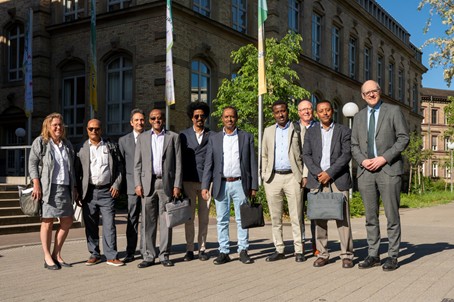
On Friday, 16 May 2025, the Karlsruhe Institute of Technology (KIT) welcomed a high-ranking delegation from Ethiopia. The group consisted of three vice presidents from leading Ethiopian universities as well as representatives from the Ministry of Education. The purpose of the visit was to learn about KIT’s diverse research and teaching activities and to identify potential links for further developing the Ethiopian Centers of Excellence.
The guests were welcomed by KIT’s Vice President for Teaching and Academic Affairs, Prof. Alexander Wanner. Project leader Prof. Andreas Fink then presented the strategic funding project FA(ST)2Africa, which aims to highlight and expand KIT’s Africa-related research and academic activities and to develop an Africa strategy for the institution. Key thematic areas include energy, water, climate, and raw materials.
Afterwards, the delegation was given practical insights into current research initiatives: At the Light Technology Institute, Prof. Alexander Colsmann presented developments in organic photovoltaics. At the Institute for Water and Environment, Prof. Olivier Eiff, Prof. Erwin Zehe, and Dr.-Ing. Frank Seidel introduced ongoing work on hydrological research questions. The morning concluded with a presentation on the latest technologies in membrane processes.
In the afternoon, Prof. Andrea Iris Schäfer showcased the activities of the Institute for Advanced Membrane Technology, located at Campus North. This was followed by insights into current projects on embedded systems and sensor technology presented by Prof. Wilhelm Stork and Markus Lehner at FZI.
The delegation expressed great appreciation for KIT’s innovation potential and interdisciplinary approach. They particularly emphasized the open dialogue and the strong commitment to building sustainable partnerships.